
Angioplasty vs Bypass Surgery: Which One Do You Need?
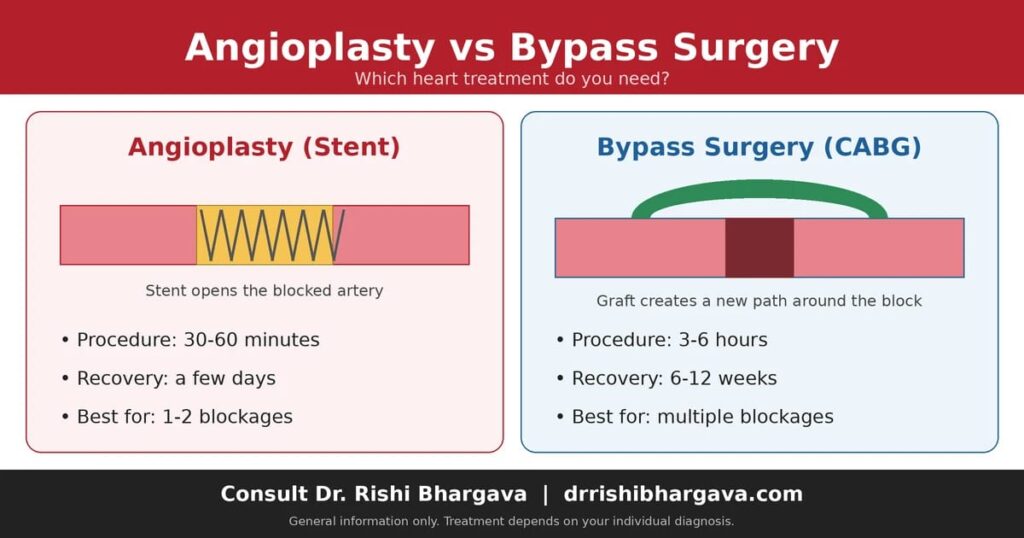
Finding out that your heart arteries are blocked can raise several questions. Do you need angioplasty, or is bypass surgery a better option? The answer depends on the location and severity of the blockages, your heart function, and your overall health. Both procedures improve blood flow to the heart, but they work differently. Many sufferers struggle to understand angioplasty vs bypass surgery. This distinction is important to help you discuss your treatment options with your cardiologist. What Is Angioplasty? Angioplasty is a procedure that helps open narrowed or blocked arteries that supply blood to the heart, without major surgery. The doctor guides a thin tube called a catheter through a blood vessel, usually in the wrist or groin, to reach the affected artery. Angioplasty may be recommended when specific blockages can be treated effectively with a catheter-based procedure. It is also commonly used during certain heart attacks when blood flow needs to be restored urgently. What Is Bypass Surgery? Coronary artery bypass grafting or CABG, commonly called bypass surgery, creates a new route for blood to reach the heart muscle. The surgeon uses a healthy blood vessel from the chest, arm, or leg to bypass the blocked section of an artery. The doctor may suggest this surgery when the diagnosis shows that several heart arteries are blocked. Bypass surgery may also be advised for serious blockages or when a main artery carrying blood to the heart is affected. It may also offer better long-term outcomes for certain patients with diabetes and complex coronary artery disease. Angioplasty vs Bypass Surgery The main difference lies in how each procedure restores blood flow. Let us find out more: The best treatment depends on the patient’s heart condition and overall health. A smaller procedure is not always the better choice. Angioplasty vs bypass surgery helps patients discuss these differences with their doctors. How Long Does Recovery Take? Angioplasty recovery time varies according to the patient’s condition and whether the procedure was planned or performed during an emergency. Many patients return to light activities within a few days, but their doctor must confirm when it is safe to resume work, driving, and exercise. Recovery after bypass surgery usually takes several weeks, with complete recovery often requiring around six to twelve weeks or longer. Follow-up visits, prescribed medicines, and cardiac rehabilitation can support recovery after either procedure. What Is the Cost of Angioplasty in Navi Mumbai? It depends on factors such as the number and type of stents required, hospital charges, medical investigations, and the length of hospital stay. Emergency treatment and additional medical conditions may also affect the total expense. Ask the hospital for an itemised estimate and check your insurance coverage before a planned procedure, if time permits. Cost should be considered alongside clinical suitability and expected outcomes. How Do Doctors Decide? When you visit an interventional cardiologist Navi Mumbai, they will assess symptoms, angiography findings, heart function, medical history, and other risk factors before recommending treatment. In complex cases, a joint review by an interventional cardiologist and cardiac surgeon may help identify the most appropriate approach. Some patients may initially need medicines and lifestyle changes rather than either procedure. Never delay emergency care if you experience sudden chest pressure, breathlessness, cold sweating, or faintness. Learning angioplasty vs bypass surgery is important. But the final decision should always be based on your individual medical assessment. Conclusion Ultimately, angioplasty vs bypass surgery is a decision that should be made after a detailed medical assessment. Dr. Rishi Bhargava can help you understand your diagnosis and discuss suitable treatment options for your heart health. Book a heart consultation today! Discuss your diagnosis and the next steps for your care.
Heart Attack Symptoms in Men & Women: Early Warning Signs and When to Go to ER

A heart attack does not always begin with severe chest pain. Some people experience clear warning signs, while others notice symptoms that seem unrelated to the heart. Knowing the heart attack symptoms in men and women can help you recognise an emergency and seek treatment without delay. What Are the Common Heart Attack Symptoms? A heart attack occurs when blood flow to part of the heart muscle becomes blocked or severely reduced. The symptoms can develop suddenly or begin gradually and may come and go. Common heart attack symptoms include: Heart Attack Symptoms in Men Men may experience the more commonly recognised signs of a heart attack, particularly chest pressure or discomfort. The discomfort may feel like tightness, squeezing, fullness or pain and can continue for several minutes or disappear and return. Pain may also move from the chest towards one or both arms, the back, neck or jaw. Breathlessness, sweating, nausea or dizziness can occur alongside these symptoms. However, it is important not to wait for severe chest pain before seeking help. Some heart attack symptoms may be mild at first. How Can Symptoms Differ in Women? Women can experience chest pain or discomfort during a heart attack too. However, they may also experience symptoms that are easier to mistake for another health problem. These can include: These symptoms should not be dismissed simply because chest pain is absent. The women may be more likely to experience some of these accompanying symptoms. What Are the Early Signs of a Heart Attack? Mild chest pressure, unexplained breathlessness, unusual fatigue, sweating or discomfort in the upper body may occur before the condition becomes more severe. It is not possible to determine the cause from symptoms alone. Several conditions can cause chest discomfort, including digestive problems, muscle strain and heart-related conditions. This is why new, unexplained or concerning symptoms need proper medical evaluation. Can a Heart Attack Happen at a Young Age? A heart attack can occur at a younger age, although risk generally increases with age. Factors such as smoking, diabetes, high blood pressure, high cholesterol, obesity, physical inactivity and family history can increase cardiovascular risk. Therefore, persistent or unusual symptoms should not be ignored simply because someone is young. Heart attack symptoms require attention based on the symptoms and overall risk, not age alone. When Should You Go to the ER? Seek emergency medical help immediately if you have chest pressure or pain, difficulty breathing, sudden weakness, cold sweating, nausea, dizziness, or pain spreading to the arm, back, neck or jaw, particularly when these symptoms are new or unexplained. Do not wait to see if the symptoms disappear. Heart muscle damage can increase as treatment is delayed. Emergency medical services can also begin assessment and care while transporting the patient to the hospital. Why Early Medical Evaluation Matters If you experience concerning symptoms, prompt evaluation can help identify a heart problem and guide appropriate treatment. For ongoing concerns about heart health or recurring symptoms, consulting a cardiologist in Kharghar can help with further assessment and preventive care. Conclusion The warning signs can help you respond quickly when something feels wrong. You must not ignore chest discomfort, or breathlessness, and pain in the upper body, especially when they are sudden or unexplained. If you recognise heart attack symptoms early, seek emergency care treatment immediately.